Innovating the Separation of Multiple Forestry Income Rights in Forest Tenure Reform
Innovating the Separation of Multiple Forestry Income Rights in Forest Tenure Reform — Solving Liquidity, Part Two
This chapter begins to touch on explorations in forest tenure reform.
Many people have asked me: forest tenure reform is the work of the forestry authorities, so why would a company like yours go to such lengths to meddle in it?
My answer is that a company’s goal is to develop the value of forest resources as thoroughly as possible. The more thoroughly it is developed, the more profitable it is, and only then can more people be drawn in to protect these “mountains of gold and silver” — and that “thorough” development has to be underpinned by innovative property-right and distribution systems.
The following will explore the work of innovation in forest tenure reform from two angles:
(1) Unlocking the forest’s three-dimensional, diversified income streams
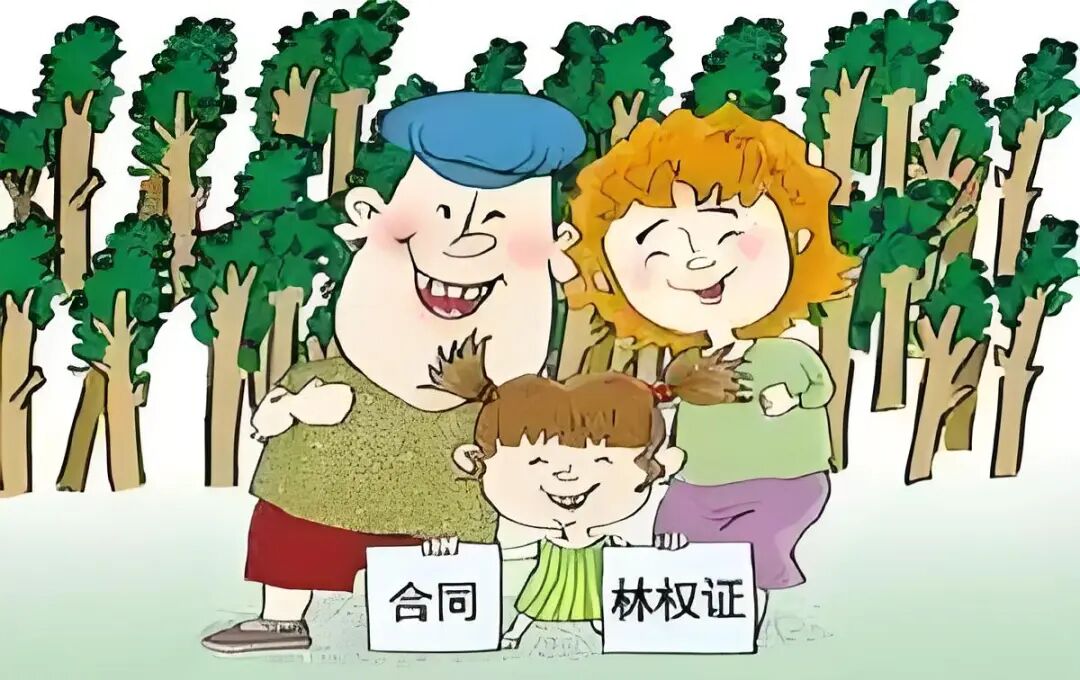
(2) Separating developer value from the retained value of the original rights holder, so that forest tenure equity participation is genuinely realized at the legal level — linking farmers, benefiting farmers (farmers into shareholders)
Unlocking the Forest’s Three-Dimensional, Diversified Incomes
A forest’s greatest distinguishing feature compared with farmland is its three-dimensional biodiversity — that is to say, its income is three-dimensional and diverse. You do not need a forestry degree: draw a tree on a piece of paper, and you can sketch out roughly what categories of income a forest yields.
-
Canopy — forest fruits, leaves, birds, insects, and other inhabitants
-
Trunk — timber, bark (containing various active compounds)
-
Understory — space for cultivating and breeding plants and animals, microbial cultivation, and the organic matter formed from metabolites such as fallen leaves and droppings
-
Forest space — tourism and wellness
-
Ecological value — carbon sinks (CCER)
In the past, forest tenure reform has been devoted to promoting the same separation of three rights applied to farmland (ownership, contract, and management rights), but I believe that is far from enough. The separation of three rights only solves the mechanism by which forest farmers transfer management rights and cooperate with forest developers. It cannot solve the problem of simultaneously releasing and developing a forest’s multiple income streams. (Farmland yields a single income — plant vegetables and you get vegetables, plant beans and you get beans. The separation of three rights therefore suits farmland but not forest land.)
Let us imagine a case. Old Zhang contracts a tract of mountain forest land to establish a plantation, planting Yunnan pine. During the dozen or so years before the final felling period, he wants to develop pine-needle extract products at the same time, along with an understory economy and some forest study-tour projects. But he does not know how to do any of this himself, so he thinks about finding several specialized firms to partner with on each project.
Because his forest land has a good location and good site conditions, a biotech company, a medicinal herb cultivation company, and a wellness tourism company each quickly took an interest in his tract. When the parties were ready to sign contracts, the problems appeared.
The biotech company is publicly listed, and every investment it makes must be backed by a title certificate it can book as an asset. But the forest tenure certificate has already been transferred and registered under Old Zhang’s name, so no duplicate certificate can be issued.
The herb cultivation company needs to use this understory economy base to apply for a loan, and without a forest tenure certificate it likewise cannot pass the bank’s credit review.
The wellness tourism company faces the same situation: without a certificate it cannot obtain listing approval from third-party tourism platforms.
This is the problem that multiple development of a forest faces under the existing rural property-rights system. Let us now look at the village collective’s side.
Ownership of the forest land belongs to the village collective. After the hills were allocated to households, contract rights went to the villagers registered in the village. Under the traditional model of transferring forest tenure certificates, once Old Zhang takes over the tract, the villagers holding contract rights lose their contract rights (use rights) — in other words, they collect a land rent of a few dozen yuan, at most a hundred-odd yuan, a year and then walk away. Even under the separation of three rights the outcome is the same: the villagers do keep their contract rights and cede management rights to Old Zhang, yet all they still receive is a hundred-odd yuan a year in land rent, and from then on they have no share of the wealth. As Old Zhang puts it: “I have already paid you the land rent; we owe each other nothing. You want to buy in and take a share of my profit — with what, exactly, would you buy in?”
So, to sum up the situation: on one side, villagers lose their land the moment they transfer it (and even under the separation of three rights the substantive result is the same — the villagers hold no additional bargaining chips for cooperation); on the other side, Old Zhang is not omnipotent. He wants to develop every stream of income from this forest, yet without certificates he cannot attract legitimate development institutions.
What is the solution?
While working in Tonghua, Jilin, between 2020 and 2022, I proposed the idea of separating multiple forestry income rights on top of the separation of three rights.
Following the five major income directions of a forest outlined above, and without altering the existing forest tenure certificate (real estate title), forestry income-right certificates can be titled separately on the basis of a lease relationship, its content, and its term — and one forest can hold multiple certificates. In other words, for a single tract of forest land, five income-right certificates for different income directions can be titled and issued: canopy income, timber (trunk) income, understory income, spatial income, and ecological income.
The legal basis for multiple forestry income-right certificates is this. Take the same case again: the biotech company signs a contract with Old Zhang to lease, for ten years, the canopy pine-needle harvesting income from the forest land he holds. Once the lease relationship is established, in legal terms it means the canopy harvesting income for the next ten years belongs to the biotech company. So all that is needed is for one licensed property-rights exchange to notarize and title that lease to the company, and to register and issue a canopy harvesting income-right certificate. The other income streams follow the same logic.
We are glad to see that in the 2024 “Collective Forest Tenure Reform” document issued by the General Office of the CPC Central Committee and the General Office of the State Council, income rights were explicitly included and supported for the first time. Yet the detailed operational rules in practice still await more exploration by forestry departments.
Multiple forestry income streams first solve the problem of “many harvests from one forest”, effectively developing a single forest’s various potential income streams to the maximum. This is a powerful support for forest resource assetization, and it uses multiple income streams to overturn the old assumption that forestry does not make money.
Of course, we must also recognize that under many current institutional constraints, the five income streams cannot all coexist fully. The most typical case is forestry carbon sinks (ecological income): under current carbon-sink methodologies, and on the basis of the additionality argument, carbon-sink income conflicts with other forestry income streams. Another example is an economic forest entering its final felling period — whether the harvest window can run in parallel with other income businesses depends on more refined planning. So the reform of multiple forestry income rights also forces forest management toward market-oriented, refined planning, refined management, refined operations, and technological support that pursues protection and development together. It will also help forestry move from a crude, traditional industry to a modern biotechnology industry.
Another major benefit of forestry income-right certificates is that they can better drive forestry finance. How so?
Income-right certificates are tied to the eventual forest developer, which means that in most cases they will want to use those certificates as collateral for financing. In April 2022, the People’s Bank of China’s “Opinions on Doing Well the Key Work of Financial Support for Comprehensively Advancing Rural Revitalization in 2022” (Yin Fa [2022] No. 74) explicitly proposed exploring support for mortgage financing on forestry income rights. Now think about it: what the financial institution receives as collateral is not a physical asset but the income of the coming years. Doesn’t that mean you must provide the institution with a complete, demonstrable analysis and projection of the income source? That in turn forces the borrower to view and plan the development of forest resources better from a financial perspective.
Separating Developer Value from the Retained Value of the Original Rights Holder, and Genuinely Realizing Forest Tenure Equity Participation at the Legal Level — Linking Farmers, Benefiting Farmers (Farmers into Shareholders)
In Old Zhang’s case above, we mentioned the other side of the dilemma: “villagers lose their land the moment they transfer it.” The root cause is that under the existing model, once villagers rent out the forest land they have no cards left to play. The land is already gone, and they have no capital to buy in with. Even if Old Zhang’s project were a stand of money trees, the villagers could only watch helplessly as he rakes in profits, with no share in it at all.
This neither matches the goals of rural revitalization and common prosperity, nor bodes well for Old Zhang’s sustainable operation in the future — because a situation in which only one person makes money is destined not to last.
Although the state strongly encourages and promotes linking-farmers, benefiting-farmers mechanisms, without breaking through this problem at the level of legal principle, the shares that many places claim to give village collectives and villagers remain nothing more than the personal whim of certain bosses currying favor with policy — they can never become a replicable, promotable policy. If the developer is a private boss, he can unconditionally promise to transfer the land and then hand the village a few shares; but because the village put up no money to co-invest, those are dry shares given as a gift, and you do not hold a genuine shareholder position in the legal sense. And if the developer is a legitimate listed company or state-owned enterprise, the legal mechanism leaves them no way to hand out shares for nothing.
Multiple forestry income rights solve the legal-principle problem of forest farmer equity participation on two levels.
Take Old Zhang’s case again.
First, when transferring the forest land: Old Zhang is in the timber and forest engineering business, so the village need only transfer the timber income right to him, and the village still retains the other four income streams. The village can contribute those other four rights as equity at a fair value.
Second, because multiple income rights are in place, forest land valuation can shift from the traditional market-comparison approach (the average forest land rent in a region) to calculations based on planned multiple income streams — that is, the future-income valuation method. In our own practice, taking the southwest region as an example, forest land currently rents for usually under RMB 150 per mu per year; under the future-income method it can be appraised at at least RMB 500 per mu per year, and with sound planning, appraising over RMB 3,000 per mu per year is no great feat.
This income-method valuation is not meant to let villagers raise the land rent (raising it would sharply increase the developer’s upfront input costs, which is not beneficial). It is meant so that after forest farmers transfer their land at RMB 150, they in fact still hold a residual income value of RMB 350, and with that properly appraised residual value they can obtain a legally recognized equity stake at a fair price (discounted by a fair coefficient, since it is a contingent return).
To sum up, the separation of multiple forestry income rights offers the following advantages:
-
It drives forestry to develop and operate in the direction of market-based income
-
It unlocks the forest’s multiple, three-dimensional income streams and maps each one to its corresponding property-right relationship
-
It realizes residual rights or residual value, breaking through the legal-principle obstacle to “farmers into shareholders”
-
Multiple income rights are a means of finely breaking up and dividing forest resources, which is more conducive to the circulation of forest resources
-
The multiple-income mechanism forces government, village collectives, forest farmers, developers, and financial institutions to build more complete, more precisely market-income-oriented plans for forest development and operation, driving forestry to transform from a traditional industry into a modern, technology-enabled industry.