Natural-Source Biomedicine
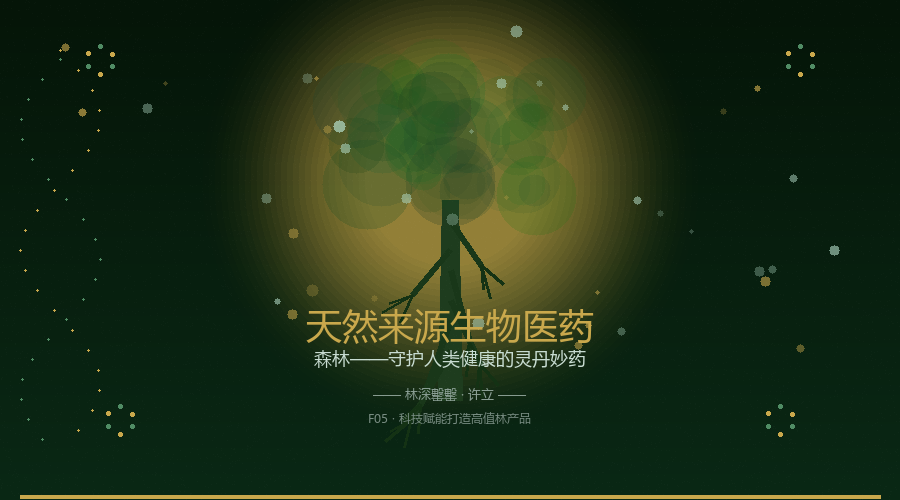
Having covered food and new materials, today let us turn to the topic that excites me most — natural-source biomedicine. While writing this piece, one unforgettable image from the film Avatar kept echoing in my mind.
On the planet Pandora, the Na’vi have a sacred “Tree of Souls.” Whenever a Na’vi lies at death’s door, her people carry her into the heart of that tree, and thousands of glowing “woodsprites” rain down on the wounded like a river of stars, and the tree’s energy heals her. This imaginative science-fiction scene reveals precisely an ancient truth that modern medicine has gradually forgotten:
“Humankind walked out of the forest. The place that gave birth to human life must hold the miracle cures that safeguard human health.”
This is not poetic romance but ironclad evolutionary logic. Humans have existed on Earth for about 300,000 years, while our primate ancestors lived in forests for more than 60 million years. Across those 60 million years, our bodies, our genes, and our immune systems co-evolved through interaction with the forest. The air we breathe comes from forest photosynthesis; the fresh water we drink depends on the forest’s water conservation; the first food we ate came from fruits and roots in the woods — at the molecular level, our bodies naturally “know” the forest.
For its own survival, meanwhile, the forest developed an extraordinarily complex chemical defense system over more than four billion years of evolution. Plants cannot run and cannot hide; their weapon is chemistry. Every tree, every herb, every shrub, every fungus — in an evolutionary arms race lasting millions of years — has synthesized active compounds that humans cannot yet fully replicate. Some of these compounds can kill cancer cells, some can reverse aging, some can repair damaged nerves, some can rebuild a collapsed immune system.
The forest is the largest, oldest, and wisest pharmacy on Earth. And we have only just begun to learn how to “read” its prescriptions.
1. The Forest: The Womb of Humanity and Its Largest Library of Chemical Molecules
To understand the value of forest medicine, we first need a shift in our cognitive framework: do not measure a forest’s value by its timber yield, but by its molecular diversity.
According to Natural Product Reports, humanity has so far isolated and identified more than 200,000 natural products, about 70% of them from the plant kingdom, with forest ecosystems contributing the great majority. More important still, by conservative estimate at least one million more natural products on Earth remain undiscovered and unidentified — no one knows how many secrets for curing human disease lie hidden in this “chemical dark matter.”
The world’s first artificially synthesized chemical drug was aspirin, in 1899. From then on, humanity embarked on a century of brilliance in organic synthetic drugs. Yet one awkward fact remains: over the past two decades, chemical drugs with “entirely new scaffolds” obtained through high-throughput screening have become increasingly rare. The “inspiration” of artificial combinatorial chemistry is running dry, and the global pharmaceutical industry has had to turn its gaze back to nature — to forests and oceans — in search of active molecules that more than four billion years of natural evolution have already “designed.”
The data speak most clearly. Of all small-molecule anticancer drugs approved by the FDA (U.S. Food and Drug Administration) between 1981 and 2019, about 65% derive directly or indirectly from natural products. In antibiotics alone, that share exceeds 75%. Nature, after all, is humanity’s greatest medicinal chemist.
I have made the same point on many occasions: when you manage a 100,000-mu forest, do not fix your eyes only on the timber that can be felled — you must be able to see the flavonoids in every leaf, the terpenoids wrapped in every piece of bark, the alkaloids stored in every inch of root, the polysaccharides accumulated in every fungus. In theory, if you developed and utilized every chemically active substance in a forest, that forest would deliver returns far exceeding those of a gold deposit of the same area.
How do you find them? First, through forestry field surveys, systematically record what trees your forest holds (leaves, branches, bark, roots), what herbs (leaves or rhizomes), what insects, what microorganisms, what birds and animals make their home there (their metabolites and excreta). Then hand those samples to a professional natural-products chemistry laboratory and let them tell you what compounds these materials contain, what biological activity those compounds possess, and whether chemical modification or biotransformation can turn them into more valuable secondary metabolites.
Common categories of active ingredients include flavonoids (antioxidant, anti-inflammatory), sterols (hormone regulation), saponins (immune stimulation), terpenoids (anticancer, antimalarial), and alkaloids (analgesic, antitumor), along with all kinds of special molecular structures that humans still cannot synthesize artificially.
One rule particularly worth remembering: toxic organisms are often treasures. The more capable something is of “poisoning” other organisms to death, the more likely it is to contain extremely rare, powerfully functional proteins or compounds — because toxicity itself is an extremely efficient chemical weapon, and once precisely modified, such a “weapon” can often be converted into a precision-guided missile aimed at cancer cells.
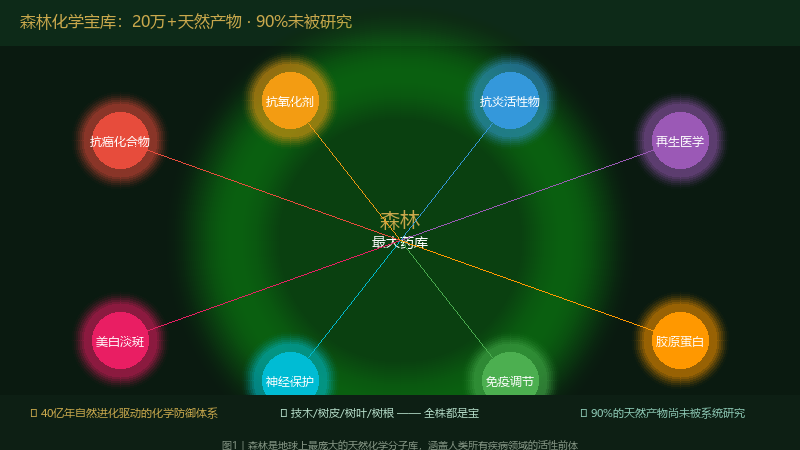
Figure 1 | The forest holds 200,000+ natural products, 90% of them never systematically studied — the largest untapped pharmacy on Earth
1.1 Case Study: Langdu (Euphorbia fischeriana) — From “Toxic Through and Through” to a Multibillion-Yuan New Drug
Let us look at a highly representative case — langdu.
Langdu (Euphorbia fischeriana) is a perennial shrub-like herb of the Euphorbiaceae family, 30–60 cm tall, with a thick, fleshy taproot containing yellow latex. It is widely distributed on hillsides, grasslands, and beneath forest canopies in Anhui, Henan, Jiangsu, and elsewhere. The entire plant is toxic, the root most of all. Its main toxic constituents are diterpenoids (such as langduin A and langduin B) and euphol; accidental ingestion can cause vomiting and abdominal pain, and in severe cases respiratory paralysis.
Does it not sound like something “toxic through and through,” to be avoided at all costs?
Yet these toxic compounds are precisely nature’s most precious gift to humanity. After structural modification, langduin A and langduin B display powerful antitumor activity — in particular, marked selective toxicity against certain drug-resistant cancer cell lines. At the same time, these diterpenoids show encouraging promise in anti-HIV, anti-inflammatory, and immunomodulatory fields.
Take 1,000 mu of langdu grown under the forest canopy and run the numbers: a three-year growing cycle, a dry-root yield of about 100 kg per mu, so 1,000 mu produces about 100 tonnes of dry root. Extraction rates: langduin A about 0.8%, langduin B about 1.2%. On that basis you obtain 800 kg of langduin A and 1,200 kg of langduin B. At current market prices for natural-product active pharmaceutical ingredients (langduin A around RMB 100,000 per kg, langduin B around RMB 60,000 per kg), the raw-material output alone reaches about RMB 152 million. Move further downstream into finished pharmaceutical formulations, and the market space runs to the tens of billions, even a hundred billion yuan.
From “poisonous weed” to “king of medicines,” the key to that transformation is called modern biotechnology.
2. The Forest’s Anticancer Drug Legion: From Paclitaxel to Betulinic Acid
The most brilliant chapter in natural-source biomedicine is unquestionably anticancer drugs. Let us first look at the “star anticancer drug legion” that comes from the forest:
Paclitaxel — from the bark of the Pacific yew (Taxus brevifolia). This is a milestone in the history of natural-product drug development and the world’s most successful plant-derived anticancer drug. Its indications cover ovarian cancer, breast cancer, and non-small cell lung cancer, and its peak global annual sales exceeded USD 1.5 billion (even in the post-patent generic era it still holds above the USD 1 billion level). The story of one molecule discovered in tree bark completely redrew the map of modern cancer treatment.
Camptothecin — from the Chinese endemic tree Camptotheca acuminata. Camptothecin and its semisynthetic derivatives irinotecan and topotecan are cornerstone drugs for colorectal cancer and small cell lung cancer worldwide. The FOLFIRI regimen (which includes irinotecan) remains to this day a first-line standard chemotherapy regimen for advanced colorectal cancer.
Vinblastine / Vincristine — from the Madagascar periwinkle (Catharanthus roseus). These two “tiny alkaloids” profoundly changed the prognosis of childhood acute lymphoblastic leukemia — from a mortality rate of nearly 100% to a cure rate now above 90%. This is the story of a small flower saving the lives of countless children.
Podophyllotoxin — from plants of the genus Podophyllum; its semisynthetic derivative etoposide is a commonly used chemotherapy drug for small cell lung cancer, testicular cancer, and lymphoma.
Betulinic acid — from birch bark. This is a rising star molecule: it selectively induces apoptosis in melanoma cells while showing almost no toxicity to normal cells. It is currently in Phase II clinical trials, and once approved it will be a revolution in melanoma treatment.
Behind every one of these names lie decades of scientific struggle, tens of billions in market value, and the hope of life for millions of patients. And all of it — comes from the forest.
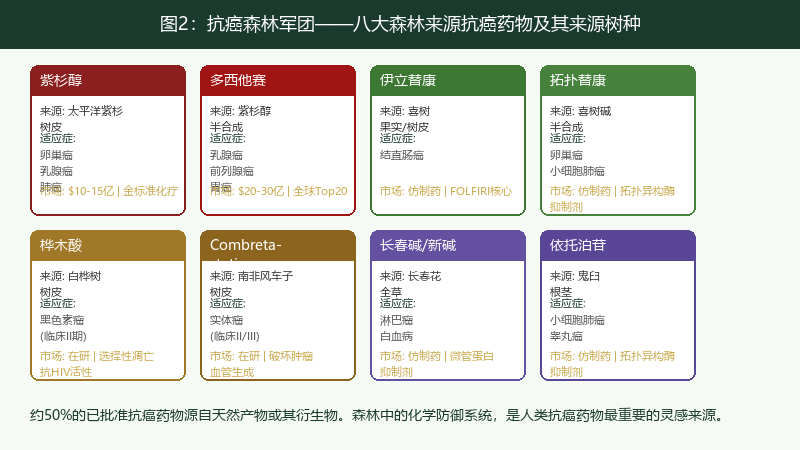
Figure 2 | The forest’s anticancer drug legion: from paclitaxel to betulinic acid, each one a “secret weapon” of nature’s four-billion-year evolution
3. Forest Cosmeceuticals: A Trillion-Yuan Market Across Four Golden Tracks
If serious medicine (prescription drugs) is the “pyramid tip” of forest value, then cosmeceuticals and skincare are the “base” that maximizes that value. A new anticancer drug may take 15 years and more than USD 1 billion from discovery to market — whereas a functional skincare product sourced from the forest may take only two to three years from raw material to product, with an equally enormous market size.
I often say the skincare industry is essentially a race on three tracks: antioxidant (anti-aging), whitening and spot fading, and anti-inflammatory repair. On all three, forest resources hold irreplaceable natural advantages.
3.1 Antioxidants: A Secret Weapon Against Time
Why are plants so rich in antioxidant compounds? The answer lies in photosynthesis itself. While producing energy, photosynthesis inevitably generates large quantities of reactive oxygen species (ROS) — a side effect of being “solar-powered.” To counter this constant oxidative stress, plants evolved an extremely powerful antioxidant defense system.
Pycnogenol — an extract from the bark of French maritime pine, whose main active constituent is proanthocyanidins. Its ORAC value (oxygen radical absorbance capacity) is 50 times that of vitamin C and 20 times that of vitamin E. It also inhibits collagenase and elastase (anti-aging directly), improves skin microcirculation, and provides UVB photoprotection. This single ingredient already generates more than USD 100 million in annual sales and is eagerly used by top brands such as Estée Lauder and SkinCeuticals.
Betulin / Betulinol — a pentacyclic triterpenoid extracted from birch bark, present at levels as high as 20–35%. It not only promotes keratinocyte migration (accelerating wound healing), fights inflammation, and acts against bacteria, but also lowers melanin content (whitening) and promotes collagen synthesis. Germany’s Symrise offers its SymUrban line and Merck its Ronacare line, both high-end skin-active ingredients developed from betulin.
Chaga — a medicinal fungus parasitic on birch, known as the “black diamond of the forest.” Its ORAC value ranks among the top five of all natural foods, and it also has outstanding tyrosinase inhibition (whitening) and skin barrier repair capacity. The French-Korean brand Erborian and Russia’s Siberian Wellness have each built a complete product line around chaga.
3.2 Whitening and Spot Fading: The “Golden Whitening” the Forest Bestows
The core target of whitening ingredients is tyrosinase — the key rate-limiting enzyme in the melanin synthesis pathway. Whitening ingredients from the forest tend to possess the natural advantage of being “highly effective yet gentle,” with a better safety profile than chemically synthesized hydroquinone ingredients.
Glabridin — from the root of licorice (Glycyrrhiza glabra); its tyrosinase inhibition is 16 times that of hydroquinone, yet it is almost free of cytotoxicity. This is the “golden ingredient” of high-end Japanese and Korean whitening products and a “ceiling-level” product in the global whitening ingredient market.
Ellagic acid — widely present in oak bark and various forest berries (raspberry, cloudberry, blackberry), with the dual benefits of whitening and photoprotection.
Arbutin — naturally present in the leaves of bilberry and bearberry; a gentle yet highly effective competitive inhibitor of tyrosinase.
3.3 Anti-Inflammatory Soothing: The Millennia-Old Wisdom of Forest Essential Oils
In the course of hundreds of millions of years of evolution, plants’ aromatic volatile oils have played multiple roles: repelling harmful organisms, attracting pollinators, and resisting microbial infection. For that reason, the great majority of forest essential oils are natural anti-inflammatory and antibacterial agents.
| Essential oil | Source | Main benefits |
|---|---|---|
| Tea tree oil | Leaves of Melaleuca alternifolia | Antibacterial, anti-acne |
| Pine needle oil | Pine needles | Antibacterial, refreshing, astringent |
| Fir oil | Needles of Siberian fir | Soothing, relaxing |
| Cedarwood oil | Cedar wood | Calming, astringent, oil-controlling |
| Eucalyptus oil | Eucalyptus leaves | Antibacterial, cooling, invigorating |
| Rosemary oil | Rosemary leaves | Promotes circulation, antioxidant |
3.4 Collagen Regeneration: Activating the Skin’s “Self-Healing Power”
The mainstream technology in the collagen market today is “exogenous supplementation” — producing recombinant human collagen or animal-derived collagen through cell biotechnology. But we have always held to one principle: the optimal solution is to work both inside and out, supplementing externally while regenerating internally. True skin rejuvenation should not mean “injecting collagen into the skin” but “teaching the skin to make collagen for itself again.”
Collagen is synthesized by fibroblasts in the skin, and those fibroblasts are highly fragile — an inflammatory environment, ROS accumulation, or a deteriorating cellular microenvironment can all cause them to undergo apoptosis or lose function. Maintaining skin homeostasis (anti-inflammatory plus antioxidant) is therefore the precondition; only then comes the use of specific active ingredients to prod the fibroblasts back to work.
At present, a range of active ingredients from the forest — reishi triterpenoids, turkey tail polysaccharides, breviscapine, and resveratrol — have all shown potential to stimulate collagen synthesis at the experimental level. This is one of the most worthwhile directions for forest raw materials to pursue in the field of “serious cosmeceuticals.”
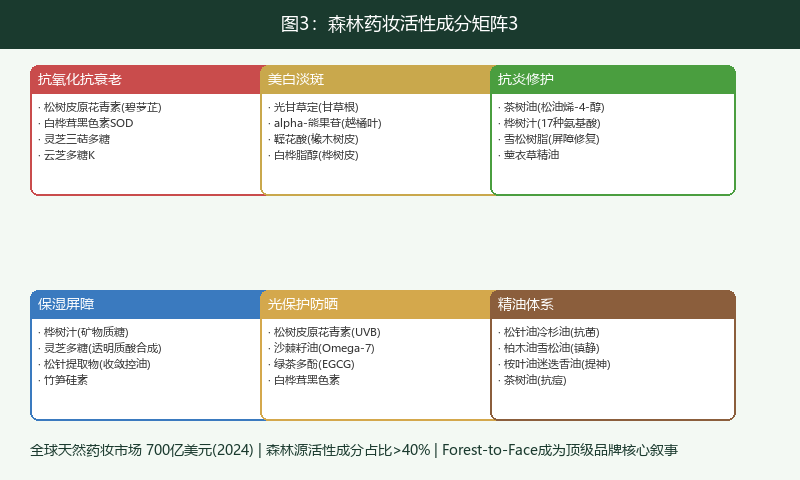
Figure 3 | The four core tracks of forest cosmeceuticals: antioxidant, whitening and spot fading, anti-inflammatory soothing, and collagen regeneration — each a trillion-yuan market
4. Forest-Derived Medical Devices: The “Black Tech” of Natural Materials
If the application of forest active ingredients in “taking medicine” and “applying creams” is already exciting, the “cross-border raid” by forest natural materials into medical devices is more exciting still. This may be a track many people have never paid attention to before.
4.1 Bamboo-Fiber Bone Substitute Materials
Repairing human bone defects has long relied on metals (titanium alloy, stainless steel) or bioceramics. But each of these materials has its own fatal flaw: metal’s elastic modulus is far higher than that of human bone, and over time it produces a “stress shielding effect” that causes osteoporosis in the surrounding bone; bioceramics, meanwhile, are brittle and poorly moldable.
The path the R&D team we invest in is exploring: using natural bamboo charcoal fiber as the substrate, applying mineralization treatment (hydroxyapatite coating), and developing a degradable bone-like substitute material. Bamboo fiber’s advantages are its natural porous structure (similar to human cancellous bone), excellent biocompatibility (very low inflammatory response in surrounding tissue after implantation), controllable degradation rate (by adjusting fiber density and degree of mineralization it can match the one-to-two-year cycle of human bone healing), and extremely low cost (only one-tenth that of titanium alloy implants).
If this technology succeeds, its application in orthopedics (bone defect filling, spinal fusion), dentistry (alveolar bone augmentation), and cardiovascular care (degradable stents) will open a blue-ocean market worth hundreds of billions of yuan.
4.2 Lignin Nanoparticle Medical Carriers — “Green Anticancer Missiles”
Lignin is the second most abundant natural polymer on Earth (after cellulose). The global pulp and paper and biorefining industries generate roughly 50–70 million tonnes of industrial lignin by-product each year, the great majority of it burned as low-value fuel. And that is precisely a perfect opportunity to “turn trash into gold.”
Lignin nanoparticles (LNPs) have attracted enormous attention in biomedicine in recent years. They possess excellent cellular uptake capacity (cancer cells are “greedier” for nanoparticles than normal cells), abundant surface functional groups (allowing precise chemical modification to target specific cancer cells), and complete degradability (ultimately breaking down in the body into non-toxic phenolic acid metabolites).
Through chemical modification, lignin nanoparticles can be loaded with chemotherapy drugs, siRNA, or photosensitizers to deliver a “precision strike” on cancer cells. Several teams internationally have already reported marked therapeutic effects of lignin nanocarriers in animal models of breast cancer and liver cancer. This is what people call the “green anticancer missile” — finding the key to curing cancer in the waste liquor of a paper mill.
4.3 Plant Cellulose Medical Dressings
Regenerated cellulose fiber made from pine, eucalyptus, and bamboo can, through specific spinning and weaving processes, be turned into medical gauze and dressings with natural antibacterial function. Compared with traditional cotton gauze, plant cellulose dressings offer lower bioburden (natural antibacterial action), better breathability and absorbency, and a softer, skin-friendly feel.
European companies such as Lohmann & Rauscher and Chinese firms such as Zhende Medical have already launched burn dressings and chronic ulcer care products based on natural cellulose, widely used in burn units, diabetic foot care, and postoperative wound management.
4.4 Natural Antibacterial Coatings for Medical Devices
Medical device-related infections (especially catheter-associated urinary tract infections and central venous catheter-related bloodstream infections) are a major challenge for health systems worldwide. Traditional antibiotic coatings are coming under severe challenge from drug-resistant bacteria.
Nature, however, has long since provided the solution: natural antibacterial ingredients of forest origin — tea tree essential oil, eugenol (from clove), eucalyptus oil, thymol — have shown outstanding, broad-spectrum antibacterial and anti-biofilm activity in medical device surface coatings. Clinical trials show that tea tree oil-coated urinary catheters can cut infection rates by more than 70%.
These natural antibacterial coatings have extremely broad application prospects in implantable devices, surgical sutures, artificial joints, and dental implants — and they sidestep the increasingly severe global public health crisis of antibiotic resistance.
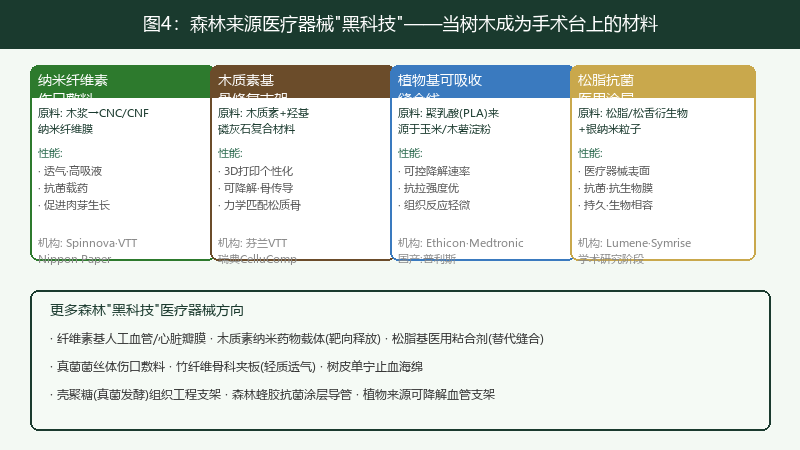
Figure 4 | Black tech: forest natural materials in medical devices — from bone substitutes to smart drug-delivery carriers
5. The Hundred-Trillion-Yuan Regenerative Medicine Track: The Ultimate Stage for Forest Resources
As noted earlier, the forest holds miracle cures that safeguard human health. And among all medical tracks, regenerative medicine — repairing, replacing, and regenerating damaged human tissues and organs — is unquestionably the largest in scale and the most expansive in imaginative possibility.
5.1 Reversing Diabetes: From Birch Trees to Mitochondrial Rebirth
One frontier project we are helping to advance is a model example of forest raw materials applied in regenerative medicine.
Pentacyclic triterpenoids extracted from birch wood chips (mainly betulin and betulinic acid) undergo precise organic chemical modification and structural optimization to synthesize a novel small molecule code-named ISRIB-A1. The target of this molecule is the mitochondrion — the cell’s “power plant.” It can reactivate the mitochondrial function of pancreatic β-cells that have gone “dormant” under a long-term high-glucose environment, restoring their ability to secrete insulin.
In diabetic mouse models, eight weeks of ISRIB-A1 treatment restored blood glucose to normal and maintained it for more than six months — the equivalent of a “functional cure” within a mouse’s lifespan. If this new drug can replicate that effect in human clinical trials, it will utterly change the fate of the world’s 500 million diabetes patients. Market potential for this single product: trillion-yuan scale.
5.2 Nodular Diseases: A Natural Stage for Forest Players
Thyroid nodules, lung nodules, breast nodules — these “findings on a health checkup” that are increasingly common in modern populations make up another trillion-yuan market. The current mainstream approach is “regular follow-up observation,” waiting until a nodule grows to a certain size or shows a tendency toward malignancy before surgical removal. Throughout that process patients bear enormous psychological anxiety.
A range of natural products of forest origin — reishi triterpenoids, curcumin (which comes from an herb but can be grown on a large scale beneath the forest canopy), and triptolide — have all shown, in vitro and in animal experiments, the potential to induce apoptosis in nodule cells and inhibit abnormal proliferation. This is a track that fits the “forest pharmacy” positioning perfectly: gentle, sustained, and regulating from the root, rather than the crude blunt instrument of “excision.”
5.3 Neurodegenerative Diseases: Can the Forest Reverse “Forgetting”?
Alzheimer’s disease, Parkinson’s disease — these neurodegenerative diseases are among the greatest medical challenges facing an aging society. Over the past two decades the world has invested more than hundreds of billions of US dollars in developing Alzheimer’s drugs, yet so far virtually all of it has failed.
The turning point may come from the forest. Ginkgolide B has already demonstrated the neuroprotective effect of natural terpenoids in the treatment of ischemic stroke. Even more exciting, recent research has found that polysaccharides and terpenoids in certain forest fungi (such as lion’s mane mushroom) can promote the synthesis of nerve growth factor (NGF) and induce the repair and regeneration of damaged neurons. Extracts of certain lianas from the Amazon rainforest have shown the ability to reverse cognitive decline in mouse models of Alzheimer’s disease.
Neurodegenerative disease is a market worth tens of billions, even hundreds of billions of yuan. Whoever finds the forest’s “key to memory” first will hold the power to define this market.
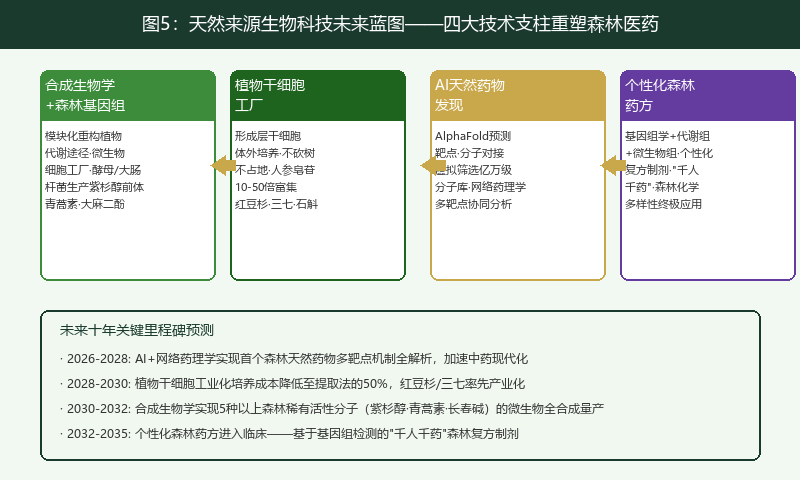
Figure 5 | The future blueprint for natural-source biotechnology: six directions — each a trillion-yuan track, driven by the convergence of AI + synthetic biology + gene editing
6. The Future Blueprint for Natural-Source Biotechnology
Looking back from 2025, humanity’s exploitation of the forest’s medicinal value is still at an extremely early stage. We have isolated and identified 200,000 natural products — but that may be less than 10% of the forest’s chemical diversity. Of those, the natural products whose biological activity we have systematically studied may be only 5%. And those we have actually developed into marketed drugs number just a few dozen.
But the technological inflection point has arrived. AI, synthetic biology, gene editing, single-cell omics — these disruptive technologies are opening the door of the forest pharmacy at unprecedented speed.
6.1 AI-Driven Natural Product Discovery
The traditional natural-product drug discovery workflow runs: collect samples → crude extraction → activity screening → isolation and purification → structure elucidation → pharmacological validation. This is classic “needle in a haystack” work; a team that screens a few hundred extracts in a year is doing well.
AI is completely transforming this paradigm. Deep learning models can analyze mass spectrometry/NMR data of natural products and predict the possible structures of thousands of unknown compounds within minutes. Even more exciting is “virtual screening” — running large-scale molecular docking simulations between a forest natural product database (a virtual natural product library) and the three-dimensional structures of disease target proteins to screen out candidate molecules that may have activity. A single GPU-equipped workstation can accomplish in one day the screening work that would once have taken a medicinal chemist a lifetime.
In the future, when we walk into an unknown forest, a hyperspectral camera mounted on a drone will first scan the chemical signals of the canopy, a portable mass spectrometer will analyze soil microbial metabolites in real time, and AI in the cloud will instantly compare them against global natural product databases — within minutes we will know what potential “king of medicines” molecules this forest is hiding.
6.2 Synthetic Biology: Letting the Forest Grow in a Fermentation Tank
Many high-value active ingredients from the forest share one bottleneck: extremely low natural content and absurdly high extraction costs. Paclitaxel makes up only 0.01–0.03% of Pacific yew bark — treating a single ovarian cancer patient requires felling three to six century-old yew trees.
The solution synthetic biology offers: move the genes responsible for synthesizing the target molecule out of the plant and into microorganisms (yeast or E. coli), then “brew” these precious compounds at scale in industrial fermentation tanks. More than 50% of the global paclitaxel supply already comes from plant cell culture or semisynthetic routes. Camptothecin, vinblastine, artemisinin — more and more natural drugs are being produced by “de-foresting” the process.
That sounds as if it contradicts our commitment to “protecting forests,” but it is exactly the opposite: synthetic biology replaces the old model of “predatory harvesting from wild forests,” freeing the forest from its role as a “raw material source” and returning it to its fundamental value as an ecosystem and a gene bank. The forest is no longer an object to be felled but a “gene library” to be read and a “chemical knowledge base” to be protected.
6.3 Plant Stem Cell Culture: “Harvesting” Paclitaxel Without Felling Trees
One step beyond synthetic biology is plant stem cell culture. By culturing yew stem cells in the laboratory (rather than whole trees), these stem cells can be directly induced to secrete large quantities of paclitaxel precursors. The stem cells cultured in a single 1,000-liter bioreactor yield as much paclitaxel as several thousand century-old yew trees.
The significance of this technology lies not only in “not felling trees” but in opening a new era of “cellular agriculture” — in the future, any active ingredient from any forest plant can be mass-produced in the laboratory through stem cell culture. The forest will ultimately become a pure “provider of genetic blueprints.”
6.4 Personalized Forest Medicine
The era of precision medicine is arriving. In the future, your genome sequence, metabolomic profile, and gut microbiome composition — all these data will be integrated and analyzed, and then AI will precisely match the combination of active molecules best suited to you from the “forest natural product library.”
This is no longer science fiction. Startups are already trying it: sequence an individual’s genome, analyze which metabolic pathways are defective or abnormal, then search the natural product database for small molecules capable of regulating those pathways. What you need may be a particular flavonoid in a particular leaf plus the polysaccharides of a particular forest fungus — combined, they become your very own “personalized forest medicine.”
6.5 The Forest Microbiome: The Invisible Pharmacy
When we talk about “forest medicine,” most people think of trees and herbs — the visible plants. But the true bulk of the forest’s chemical diversity may lie underground. A single gram of forest soil contains tens of thousands of microbial species, most of them “dark matter species” that humans have never cultured and never studied. In hundreds of millions of years of competition for survival, these microorganisms evolved extraordinarily complex and efficient chemical weapons — antibiotics, immunomodulators, enzyme inhibitors.
Scientists estimate that about 70% of the antibiotics in clinical use today derive from soil microorganisms (mainly the genus Streptomyces), and that this may be only the tip of the iceberg. “Soil microbiome drug discovery programs” are in full swing at major pharmaceutical companies and research institutions worldwide. The forest’s soil may be humanity’s last bastion against superbugs.
Conclusion: Living in Symbiosis with the Forest, Safeguarding Human Health
At this point I want to return to the image I mentioned at the beginning — the Tree of Souls in Avatar.
On Pandora, the Na’vi share with the forest a connection that we modern humans have almost entirely forgotten: they know how to listen to the forest’s voice, to understand the forest’s language, to exchange information and energy with every living thing in it. When they are wounded, the forest knows how to heal them; when they are lost, the forest knows how to guide them.
This sounds like science fiction, but it was our ancestors’ everyday life. For millions of years our primate ancestors lived in symbiosis with the forest in exactly this way — they knew which leaves could stop bleeding, which bark could bring down a fever, which fungus could neutralize a poison. This “knowledge” was not written in books; it was passed down through genes, through behavior, and through culture, generation after generation.
Modern civilization has led us out of the forest, but it has also made us forget how to “read” the forest. What we must do today is use the technologies of the 21st century — AI, genomics, synthetic biology, metabolomics — to relearn the forest’s language and rebuild that lost connection.
“We are not the forest’s masters; we are the forest’s children. The forest gave us life, and it will surely keep guarding our health.”
From paclitaxel to betulinic acid, from pycnogenol to glabridin, from bamboo-fiber bone to lignin nanocarriers — every time we open a door of the forest pharmacy with modern technology, we find hidden behind it not just a few useful molecules but a complete, exquisitely refined system of life wisdom four billion years in the making.
Every leaf, every piece of bark, every inch of root, every handful of soil in the forest may be the starting point of the next multi-billion-yuan drug. All we need is to return to the forest humbly and use the most cutting-edge technology to “read” the oldest library of life.
On July 1, we will officially launch in Changsha, Hunan, the “Natural-Source Biomedicine CRO Platform,” built jointly with world-leading research and clinical institutions, dedicated to the systematic, large-scale conversion of forest resources into extremely high-value biomedicines. Forestry developers and biomedical practitioners who share this ambition are welcome to join us.
Living in symbiosis with the forest, safeguarding human health.
— Foreststellar · Xu Li
────────────────────────────────────
Next up: F05 Technology Empowering High-Value Forest Products (Part Three) — Wood-Derived New Materials: From Nanocellulose to Lignin Carbon Fiber
────────────────────────────────────
— Foreststellar · High-Value Conversion of Forest Resources Series —