Building Stable Fixed-Income Forest Financial Products
F09 Building Stable Fixed-Income Forest Financial Products
Author: Xu Li | WeChat Official Account: Foreststellar
Bringing “bonds that grow” into every household
Across the previous eight articles I have been doing one thing — redefining the forest, from a traditional industry of “planting trees and felling trees,” into a class of financial asset. From F01’s “the forest is the greatest financial asset the universe has given humankind,” to F02’s quantum division, to F03’s separation of multiple forestry income rights, to F04’s short-long combination development, to F05’s technology-enabled high-value products, to F06’s perpetual management, to F07’s policy-based financial leverage, and on to F08’s global FSC certification — following this chain of reasoning all the way through, I believe many readers have already glimpsed the destination: the landing of financial products.
But I also know there will still be someone asking: Mr. Xu, however lively the talk, can I really tap once on my phone and buy a forest wealth-management product of my own? Is my money safe once it goes in? How much can I get each year? And when can I take it out?
This article is where I answer those questions. And I want to give you a view that may overturn your assumptions: a forest can not only be turned into a financial product; it may also become the highest-quality class of fixed-income asset in this era of falling interest rates — because it is a “bond that grows.”
I. In an Era of Falling Interest Rates, Ordinary People Have Nowhere to Put Their Money
Let me start with a reality that everyone feels personally.
Since 2024, the three-year and five-year time-deposit rates at the major state-owned banks have both fallen below 2%, entering what is genuinely a “1% era.” Large-denomination certificates of deposit are hard to come by; after the shift to net-value accounting, bank wealth-management products no longer guarantee principal or interest, and the wave of products breaking below par at the end of 2022 still leaves many people uneasy. And the stock market? Ten years stuck around 3,000 points, with the old rule unchanged: seven retail investors lose, two break even, one profits. Housing? After this round of adjustment, the belief that “prices always rise” has been shaken, and the golden age of real estate as a wealth-management tool for everyone is essentially over.
So the question arises: China has more than 200 million retail investors and household savings deposits of over RMB 140 trillion — where does all that money go?
The answer: most of it simply sits in bank accounts, suffering the hidden depreciation of a negative real interest rate. Ordinary people do not lack the desire to invest; they genuinely cannot find an instrument they can “buy, understand, hold, and sleep soundly with.”
On the other side, China has 4.2 billion mu of forest, the largest planted-forest area in the world, National Reserve Forest projects in more than twenty provinces, and biological growth value running into hundreds of billions of yuan every year. These assets are likewise “asleep” — they lack a channel to convert steady natural appreciation into financial products that ordinary people can buy.
On one side, RMB 140 trillion with nowhere to go; on the other, tens of trillions in sleeping forest assets. What we need to do is build a bridge between them.
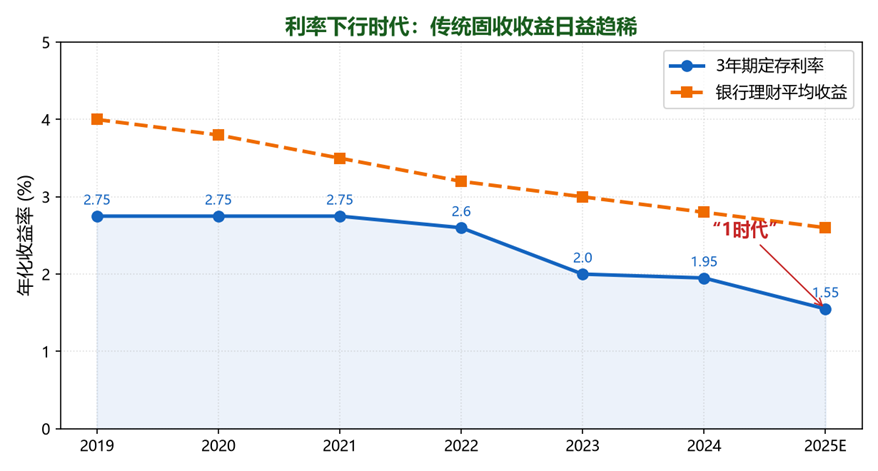
Figure 1|In an era of falling interest rates, traditional fixed-income yields grow ever thinner
II. A Forest Is a “Bond That Grows”
In the investment world, fixed income is a foundational and enormous asset class — government bonds, corporate bonds, bank wealth-management products, REITs — whose common feature is relatively stable expected returns and relatively safe principal. The global fixed-income market exceeds USD 130 trillion in total size, nearly twice the equity market.
So can forest assets be made into a fixed-income product? My answer: not only can they, but they may become the most distinctive class of asset in the fixed-income market. The reason is that a forest is a “bond that grows.”
Let me draw this metaphor out fully. With a traditional bond, you pay 100 yuan to buy it, collect 3 yuan of interest each year, and get your 100 yuan principal back at maturity. Its return is linear and certain — but only on the premise that the issuer (a state or a company) can keep paying interest. If the economy turns down and the company defaults, both your interest and your principal can vanish. In other words, the “fixed” in a traditional bond rests on the issuer’s credit, and it is constrained by the economic cycle by nature.
Now take a forest. You put 5,000 yuan into one mu of masson pine. It needs nothing from you: every day the sun rises, it photosynthesizes; every time it rains, it pushes out new branches and leaves. After 25 years, the combined return on that one mu comes to roughly 25,000 yuan — about 20% annualized. That growth does not depend on an issuer’s promise, on market speculation, or on leverage — it depends on the trees’ natural growth, day by day.
Trees do not stop photosynthesizing because the stock market crashes, refuse nutrients because the Federal Reserve raises rates, or slow their annual rings because of a geopolitical crisis. This is what I have said repeatedly in earlier articles — the forest’s “free compounding.”
So a forest is, in essence, a bond whose coupons are paid by nature. Its “fixedness” comes not from any institution’s credit endorsement but from the objective laws of biological growth. In that sense, I would even argue that “the certainty of biological growth” can be regarded as a new kind of “natural risk-free rate.” It depends not on the central bank’s monetary policy but on sunlight, rain, and soil.
Isn’t that romantic? But behind the romance lies hard mathematics. Let us look at a comparison chart.
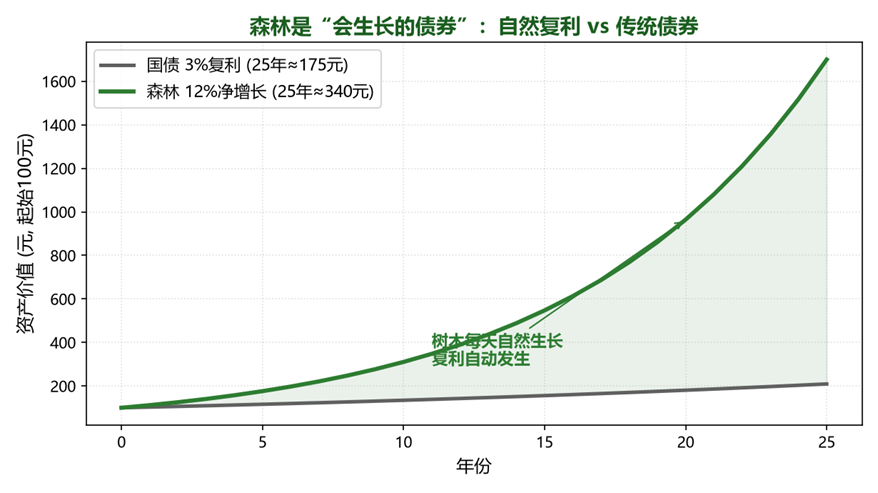
Figure 2|A forest is a “bond that grows”: natural compounding vs. traditional bonds
Invest 100 yuan either way: a 3% government bond becomes 175 yuan after 25 years (linear interest); one mu of equivalent forest asset, at a conservative net growth rate of 12% a year (after deducting management and protection costs and a risk discount), becomes about 340 yuan after 25 years. More important still, a government bond compounds only if you reinvest the interest, whereas the forest compounds automatically — the tree thickens by a millimeter and the asset gains a millimeter in value, with nothing required of you.
Wrapping this naturally stable biological growth into a standardized fixed-income product with the tools of financial engineering is, logically, a natural next step.
III. The Core Innovation: Forest “Fixed Income+” — a Floor Below, No Ceiling Above
If all we did was turn a forest into a pure fixed-income product yielding 5%–6% a year, that would of course be good — but not remarkable enough. Because the greatest charm of forest assets is that they possess both “certainty” and “imagination.”
The certainty comes from biological growth (the natural increase in timber growing stock), and the imagination comes from high-value conversion (understory medicinal materials, naturally derived biomedicine, wood-based new materials, carbon-sink premiums). The former is like a bond; the latter is like a stock.
So I propose a product-design approach — forest “Fixed Income+.” It resembles the logic of a convertible bond: take a stable fixed-income return as the “base,” then layer on a “flexible return” from high-value conversion as the “plus.”
Let me break this down with a real model of a 100,000-mu National Reserve Forest project.
【Underlying fixed income (the base)】 This forest’s annual biological growth, measured by growing-stock increase and timber futures prices, can contribute about 6%–8% of asset appreciation a year. Layered with the policy-loan spread we covered in F07 (using capital that costs 3.5% to generate a higher return), the net fixed-income base can hold steady at 5%–7%. This return is almost untouched by market swings; it is the product’s “safety cushion.”
【Flexible return (the plus)】 In the understory space of this forest we have laid out high-value business lines on the cocktail model — for example, extracting carboxyatractyloside from Siberian cocklebur for cosmeceutical ingredients, extracting essence from shrub ajania, and understory beekeeping paired with nectar-producing medicinal plants. These lines can generate 500–2,000 yuan per mu per year, which translates into an additional 3%–8% of flexible return on the asset pool. Add to that the zero-cost premium from carbon sinks and the option value of future new-material conversion.
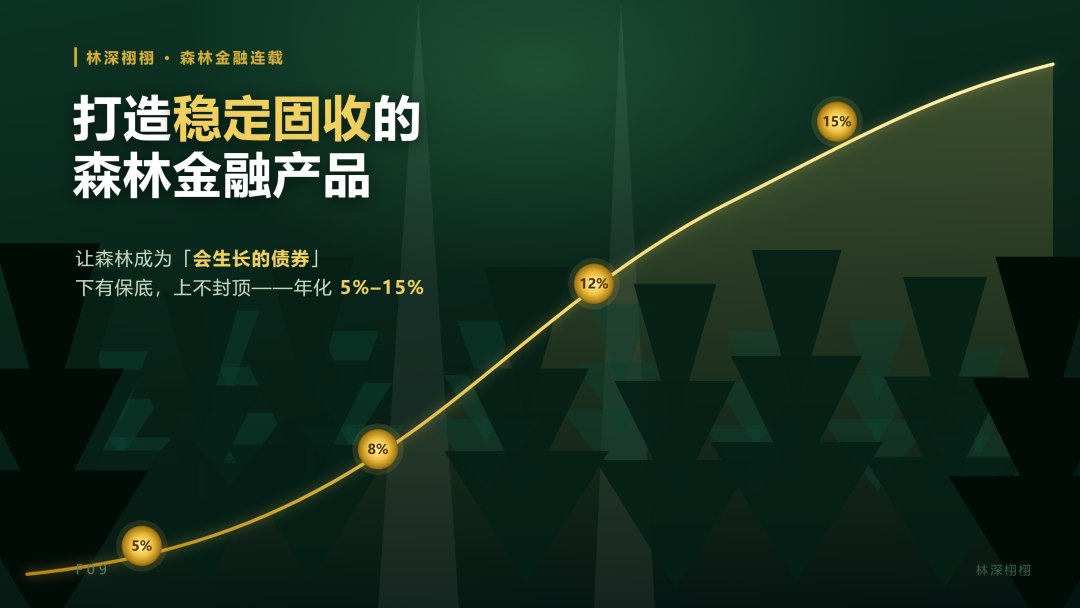
Put together, this “Fixed Income+” product has an expected blended annualized return of 8%–15% — in the worst case you still collect the 5%–7% fixed-income floor; in the good case, once high-value conversion performs, you can earn 15% or more. A floor below, no ceiling above.
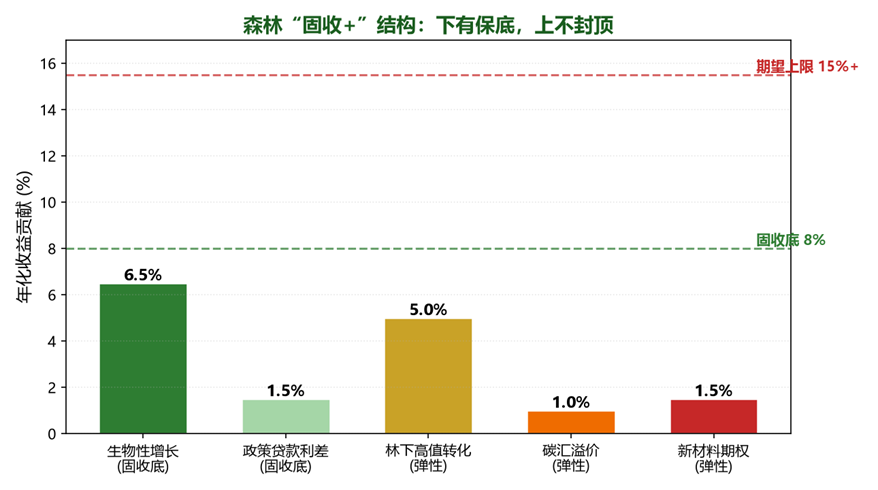
Figure 3|The forest “Fixed Income+” structure: a floor below, no ceiling above
The elegance of this structure lies in the asymmetry of risk. The fixed-income floor locks down downside risk so you can “sleep at night”; the flexible layer opens up the upside so you have “a chance to be surprised.” Traditional pure fixed-income products cannot offer this, and neither can pure equity investing — it delivers both safety and imagination.
That is the financial charm unique to forest assets: a forest is a “Fixed Income+” structure by nature, and all we have to do is recognize that structure, quantify it, and turn it into products.
IV. A Five-Tier Product Matrix: From Institutions to Inclusive Finance
Drawing on the characteristics of forest assets, I have designed a tiered product matrix covering needs from institutional investors down to ordinary households. Each tier differs in its emphasis on return, tenor, liquidity, and minimum investment.
Tier one: forest income-right ABS (asset-backed securities). Using the future income of a tract of forest land as the underlying asset, issue asset-backed securities aimed mainly at institutional investors such as banks, insurers, and social security funds. For example, take the 20-year timber income rights on 100,000 mu of masson pine forest as the underlying, assess the future cash flow, and issue ABS at a discount rate; investors receive 5%–6% fixed interest each year, with principal returned at maturity. ABS is already a mature product in China, with more than RMB 2 trillion issued in 2023, and forest income-right ABS can operate fully within the existing framework and remain compliant. A first batch of pilots could appear in 2026–2027.
Tier two: forest REITs (real estate investment trusts). Using a forest asset pool as the underlying, issue publicly offered REITs listed and traded on a stock exchange. Investors buy and sell forest REIT units the way they trade stocks, sharing in cash flows from forest land rents, harvesting income, and the understory economy. Since China’s first public REITs got off the ground in 2021, the market has expanded into industrial parks, expressways, affordable housing, and consumer infrastructure — but forests have not yet been included in the pilot scope. Given that forest cash flows are arguably more stable than those of many already-listed REITs, adding forests as a REIT expansion direction is entirely feasible. I expect the first public forest REITs around 2027–2028.
Tier three: forest income-right certificates. This is the product we are pushing hardest under the framework of the Forestry Exchange. Taking titled canopy harvesting rights, understory operating rights, and carbon-sink income rights as the underlying, standardized income certificates are listed and issued on the Forestry Exchange with a minimum investment of RMB 10,000, suited to the broad base of small and mid-sized investors. Investors receive annual distributions on the corresponding rights and can also trade them on the exchange’s secondary market. As a national forestry property-rights trading platform approved by the State Council, the Forestry Exchange has compliant trading and settlement functions. I expect the first product at this tier to be proven out in 2025–2026.
Tier four: forest carbon-sink green bonds. Using forest carbon-sink income rights as the underlying, issue green bonds aimed at ESG-themed funds and companies with carbon-neutrality commitments. Carbon sinks yield little per mu today (RMB 10–30 per mu per year), but they have the advantage of zero marginal cost, and carbon market prices are seen as rising over the long term. Green bonds can also ride the relaunch of CCER to create a distinctive “carbon sink + fixed income” product. I expect this to land in 2026 as the CCER market matures.
Tier five: forest “Fixed Income+” funds. Integrating the resources above, issue “Fixed Income+” fund products for the general public — a fixed-income floor plus flexible return, with an expected 8%–15% annualized yield. This is the ultimate product form that best expresses the charm of forest assets, and the product we ultimately want to put in the hands of every household. It is expected to roll out at scale in 2028–2030, once the infrastructure of the earlier tiers matures.
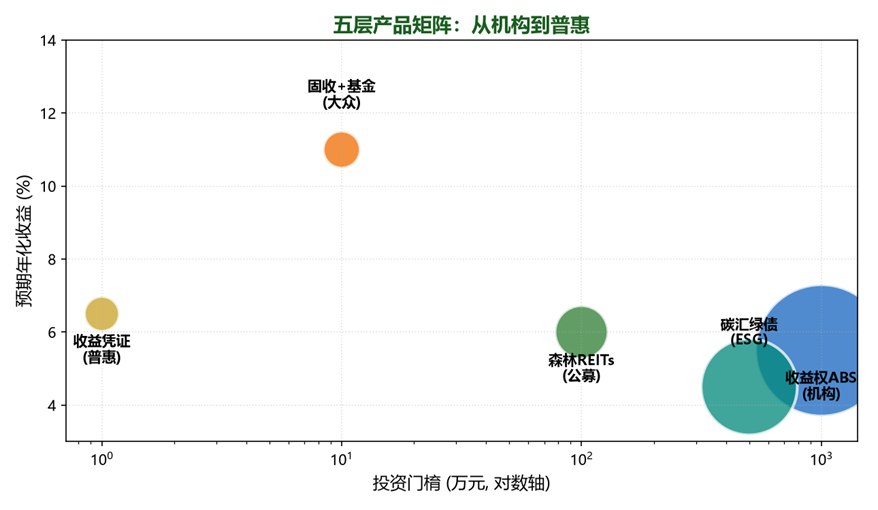
Figure 4|The five-tier product matrix: from institutions to inclusive finance
These five tiers are not isolated but a mutually supporting system. ABS and REITs give large-scale institutional capital an exit channel; income certificates and Fixed Income+ funds give ordinary people an inclusive entry point; carbon-sink green bonds connect ESG capital. The underlying is always the same set of real forest assets, differing only in how they are divided and in their risk-return structure — this is precisely the ultimate landing, at the level of financial products, of the “quantum division” we discussed in F02 and the “separation of multiple forestry income rights” in F03.
V. Six Iron Rules of Product Design
A financial product is, in the end, a business of trust. When ordinary people hand you their hard-earned money, you must make them believe three things: the asset is real, the return is steady, and the money can be taken back. To that end, we have set six iron rules for product design.
Iron rule one: the underlying asset is real and visible. Behind every financial product stands a real tract — or a real single mu — of forest land that can be verified with satellite remote-sensing imagery. Not virtual, not on paper, not produced by a model. When investors buy the product, they open the app and see live imagery and growth data for that very forest. This is the direct product-level application of the space-air-ground integrated digital twin monitoring system we mentioned in F06. Going further, we borrow ForestCoin’s “growth oracle” concept — using satellites and ground sensors to put forest growing stock on-chain in real time, so that asset growth data cannot be tampered with and can be re-verified at any time by third parties such as SGS. This solves the first-order problem of trust: how do you prove the trees really grew taller?
Iron rule two: diversified and dispersed income sources. A product that depends on timber sales alone is far too volatile — what if timber prices fall 25 years from now? So we aggregate cash flows from five income directions: timber, forest fruit, understory medicinal materials, tourism and wellness, and carbon sinks, using the portfolio as the income source. If timber falls, medicinal materials remain; if medicinal materials disappoint, tourism remains; if tourism is restricted, carbon sinks remain. Multiple income streams hedge one another, and any single risk is greatly diluted. The “cocktail model” we discussed in F04 becomes, here, a financial instrument for risk diversification.
Iron rule three: risk isolation and SPV bankruptcy remoteness. The credit risk of the forest asset and that of the operating entity must be physically separated. Even if the operator runs into financial trouble, the forest asset itself remains intact and investor rights are unaffected. We achieve bankruptcy remoteness through an SPV (special purpose vehicle) structure: the asset does not enter the operator’s balance sheet and is legally independent.
Iron rule four: insurance credit enhancement as a backstop. The biggest physical risks to a forest are fire, pests, and disease. We bring in a dual mechanism of policy-based forest insurance plus commercial insurance to cover extreme risks. By 2023, national forest insurance covered more than 2 billion mu, with fiscal subsidies typically covering 50% or more of premiums — the mechanism of insurance credit enhancement is already mature.
Iron rule five: sensible liquidity arrangements. A product locked up for a full 25 years with no trading will not sell no matter how good the return. We provide three liquidity exits: first, a periodically opened redemption window (once a year, for example); second, secondary-market trading on the Forestry Exchange; third, a “relay-baton” unit-transfer mechanism — as discussed in earlier articles, investors with different tenor preferences can pass units along like a relay baton. This lets investors exit when they need cash and add to their position when they like the outlook.
Iron rule six: information as transparent as an ETF. We publish a monthly net asset value report (NAV Report), as simple and intuitive as checking a gold ETF. Scanned forest tenure certificates, audit reports, the SPV structure, and third-party monitoring data are all made public and linked to a block explorer, proving that the reserve assets have not been misappropriated. Transparency is the best credit enhancement.
VI. Lessons from Elsewhere: Global Benchmarks in Forest Finance
Turning forests into fixed-income products already has very mature precedents abroad; in China it is still a blue ocean.
US timberland REITs are the most classic benchmark. Three listed timber REITs — Weyerhaeuser, Rayonier, and PotlatchDeltic — together hold more than 20 million acres of forest land and have operated steadily for decades. They pay shareholders steady cash dividends, with yields typically around 3%–5%, while the timberland asset itself keeps appreciating. Buying their shares is, in essence, buying a “growing forest bond.” This model has weathered the 2008 financial crisis, the 2020 pandemic, and many other shocks, proving that the counter-cyclical capacity of forest assets stands up to real-world testing.
New Zealand’s forestry fund model is also worth studying. New Zealand has overseas pension funds hold radiata pine forest land for the long term, using the steady cash flow from timber exports to support long-term pension payments — in essence another kind of forest fixed-income product.
China, by contrast, has seen public REITs develop rapidly since they broke ground in 2021: the outstanding scale has passed RMB 100 billion, follow-on offerings are routine, and underlying asset types keep expanding. Yet as of now, forest assets are still not included in the public REIT pilot scope. What does that mean? It means that once the policy window opens, China’s 4.2 billion mu of forest will be a trillion-scale blue-ocean market that is almost entirely blank.
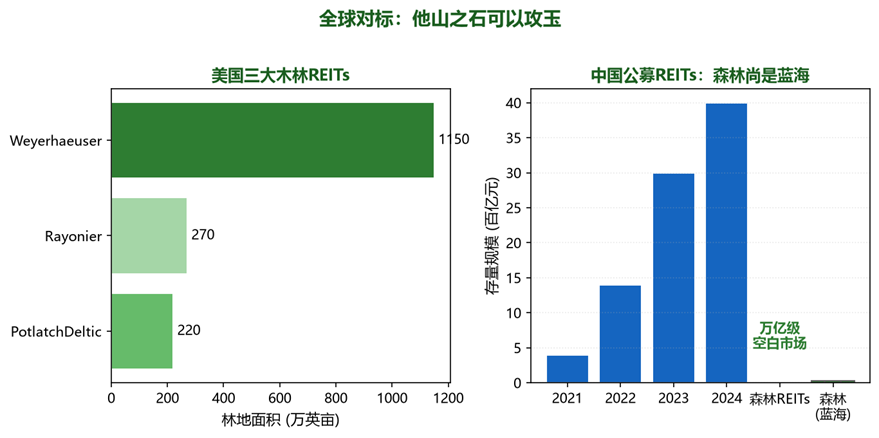
Figure 5|Global benchmarks: learning from others to sharpen our own edge
I often tell my team: if the United States can turn timber REITs into a century-long business, and China has the world’s largest planted-forest area, its densest concentration of National Reserve Forest projects, and the strongest policy-based financial support, why can’t we do it too? What we lack is not assets; what we lack is the financial engineering and institutional support to turn assets into products. And that is exactly the lesson our generation has to make up.
VII. Real Gaps and a Timeline
Having painted so many ideal pictures, I must face reality honestly — for forest fixed-income products to truly land at scale, there are still a few hard bones to gnaw. I do not dodge these problems; I believe laying them out clearly matters more than drawing pies in the sky.
Gap one: the detailed legal rules for titling multiple forestry income rights are not yet complete. The “one forest, multiple certificates” separation of multiple income rights we proposed in F03 has been written into the 2024 “Plan for Deepening the Reform of the Collective Forest Tenure System” issued by the General Offices of the CPC Central Committee and the State Council, and into relevant central bank documents, but there is still a distance from policy principle to local operating rules. Whether income-right certificates can be mortgaged independently or listed on an exchange varies from place to place. This directly affects the titling of the underlying assets for ABS and income certificates. My forecast: in 2025–2027, as pilots advance in more localities, the rules for titling income rights and registering their transfer will gradually mature.
Gap two: public REITs have not yet included forest assets. Public REITs currently focus on infrastructure and real estate, and the supporting work for forest assets — demonstrating cash-flow stability, valuation methods, tax policy — has yet to be established. This requires regulators, forestry authorities, and financial institutions to push together. My forecast: policy research and a first batch of pilots for forest REITs could begin in 2027–2028. Before then, private REITs and income certificates can prove out the business model first.
Gap three: the Forestry Exchange’s digital platform upgrade is still under way. Back in 2019 we worked with relevant agencies of the National Forestry and Grassland Administration to design a feasibility plan for the “National Forest Asset Digital Virtual Equity Investment and Trading Platform” (FADEP). But going from a concept plan to a compliant platform capable of hosting the issuance and trading of financial products involves heavy infrastructure investment — blockchain, IoT monitoring, big-data valuation, clearing and settlement. My forecast: the core platform upgrade will be completed in 2025–2027, with the first income-certificate product live in 2026.
Gap four: a third-party appraisal and dynamic monitoring system has yet to be built. Traditional forest appraisal is static and one-off, whereas fixed-income products need dynamic, real-time, verifiable asset data. A system combining space-air-ground integrated monitoring, on-chain attestation, and independent third-party review currently exists only in scattered pilots, not at scale. My forecast: by 2025–2026 a monitoring system covering the first asset pools will be in place and connected to the financial products’ disclosure system.
Gap five: investor awareness and market acceptance. Ordinary people are still unfamiliar with “forest wealth management” and still see forestry as “long-cycle and unprofitable.” This calls for a process of market education, and for the first products to build trust through real repayment records. My forecast: in 2026–2028, as the first products run smoothly through one or two dividend cycles, market awareness will rise quickly.
Piecing these together, here is a phased timeline.
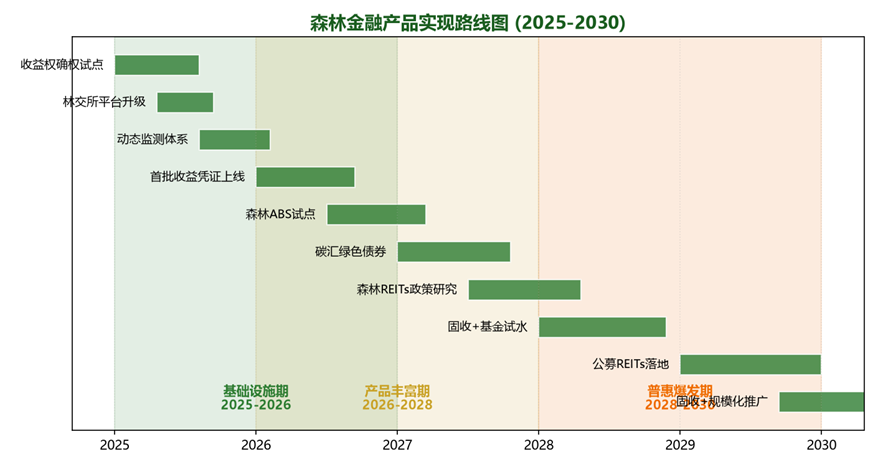
Figure 6|Roadmap for forest financial products (2025–2030)
Phase one (2025–2026): infrastructure. Complete the income-right titling pilots, the Forestry Exchange digital platform upgrade, and the dynamic monitoring system; launch the first forest income-right certificates (minimum RMB 10,000); and prove out the full chain of “titling—appraisal—issuance—trading—distribution—repayment.” This phase lays the foundation: not scale, but proof of concept.
Phase two (2026–2028): product expansion. Launch forest income-right ABS (institutional side) and forest carbon-sink green bonds; begin policy advocacy for public forest REITs and practical work on private REITs; and test forest “Fixed Income+” funds at small scale. In this phase the product matrix takes shape, and assets under management move toward the RMB 10 billion level.
Phase three (2028–2030): the inclusive take-off. Public forest REITs formally launch and expand; forest “Fixed Income+” funds reach the public at scale; and a complete ecosystem takes shape — “ABS/REITs on the institutional side plus income certificates/Fixed Income+ funds on the retail side.” Assets under management move toward the RMB 100 billion level, and tens of millions of ordinary investors truly hold forest units of their own.
Is this timeline conservative? I think it is pragmatic. Financial innovation is never achieved overnight, but once the direction is set, the pace often exceeds expectations — just as no one in 2021 imagined public REITs would break RMB 100 billion within a year. The window for forest fixed-income products is opening now.
VIII. So That Ordinary People Can Buy It, Hold It, and Sleep Soundly
Finally, I want to talk about why we are building these products in the first place.
China has more than 200 million retail investors. They are hardworking, frugal, and trusting of the system, yet their wealth-management options keep shrinking: deposit rates fall ever lower, wealth-management products no longer guarantee principal, the stock market swings too wildly, and housing has already peaked. A great deal of ordinary people’s money is in the awkward position of having “nowhere to go and no nerve to move.”
And forest assets? Hundreds of millions of mu of National Reserve Forest, billions of mu of forest resources, and hundreds of billions of yuan in steady biological growth value every year — yet there is no channel for ordinary people to take part.
Our goal is to open that channel. To let an ordinary person spend RMB 10,000 and own a small patch of forest of their own — something they can see, receive income from, and pass on to their children. This is not just a matter of investment return; it is about making property income inclusive.
Picture the scene: a retired grandfather finishes breakfast, opens his phone, and sees that the masson pines he holds have grown a few more centimeters taller, that this year’s pine nut harvest is good, and that the system tells him his dividend is expected to be 10% more than last year. He feels settled, and says to his wife: “Our patch of forest brought in a few more bushels this year.” What does that feel like? It feels solid, warm, and reassuring.
This is the most fundamental meaning of fixed income — not the pursuit of windfall profits, but peace of mind. Government bonds bring peace of mind because the state’s credit stands behind them; forest fixed income brings peace of mind because the laws of nature’s growth stand behind it. One relies on the state, the other on nature, and both arrive at the same place.
Forest assets inherently possess this quality of reassurance and trust. Our task is to use the tools of financial engineering to turn that quality into standardized financial products and deliver them to every household. To make lucid waters and lush mountains truly become mountains of gold and silver in ordinary people’s hands — not in a slogan, but in their accounts.
In the next chapter — the last of this series — I want to take up the boldest and most imaginative topic of all: against the global trend toward stablecoins, could forest assets become the anchor of the next generation of the monetary system? Is ForestCoin a dream, or a reality that is already arriving?
Stay tuned for F10.
◆ ◆ ◆
— Foreststellar · Perpetual Forest Management Series · F09 —